Job 1:1-3:26
1 Corinthians 14:1-17
Psalm 37:12-29
Proverbs 21:25-26
Read Today’s Scripture – Click Here
Click on the Play Button below to Listen to Today’s Scripture
Old Testament: Job 1:1-3:26
When Everything Falls Apart, Will You Still Trust God?
It is easy to talk about trusting God when everything is going right. Job 1–3 takes us somewhere much harder. What happens when the blessings are gone, the answers are not coming, and you cannot understand why God has allowed any of it?
Job was not introduced as a wicked man getting what he deserved. Scripture says he was “blameless and upright, one who feared God and turned away from evil” (Job 1:1, ESV). He cared about his family and their relationship with God. He regularly offered sacrifices concerning his children because he took sin seriously.
Job was walking with God before the trouble came, and there is something we need to learn from that. We should not wait until our world falls apart before we decide we need God. The time to get serious about His Word, prayer, obedience, and turning away from sin is while things are still going well. When the storm hits, you are going to find out what your faith was really resting on.
Then God lets us see something Job could not see. Satan appeared before God and questioned Job’s motives. “Does Job fear God for no reason?” (Job 1:9, ESV). In other words, Satan was saying Job only served God because God had blessed him.
That question reaches right into our lives today. Do we love God because He is God, or do we love Him mainly because of what He gives us? That is easy to answer until something gets taken away.
God allowed Satan to attack Job, but Satan could only go as far as God permitted. Satan was not in control. God was.
Then the news started coming. Job lost his livestock, servants, wealth, and finally his children. One messenger had hardly finished speaking before another arrived. Everything Job had known was being ripped away from him.
Job did not pretend it did not hurt. He tore his robe, shaved his head, and fell to the ground. But then he worshiped God.
“Naked I came from my mother’s womb, and naked shall I return. The LORD gave, and the LORD has taken away; blessed be the name of the LORD” (Job 1:21, ESV).
That is real faith. Job was brokenhearted, but he did not turn against God. We need to understand that grieving is not the same thing as losing faith. There are times when believers hurt deeply. There are times when we cry, question, and struggle to understand what God is doing. The Bible does not tell us to fake a smile and pretend everything is fine.
Then Job lost his health. Painful sores covered his body. His wife told him to “Curse God and die.” Job answered, “Shall we receive good from God, and shall we not receive evil?” (Job 2:10, ESV). The word here refers to calamity or trouble, not moral evil. Scripture is clear that God Himself does not commit evil. James 1:13 says that God “cannot be tempted with evil, and he himself tempts no one.”
Job understood something we often struggle with. We gladly accept the good things God gives us, but what happens when He allows something we never wanted?
That is where faith gets tested. Job’s friends eventually came and sat with him for seven days without speaking because they saw how great his suffering was. There is wisdom in that too. Sometimes people who are hurting do not need us trying to explain why God allowed something when God has not told us why. Sometimes they need someone willing to sit beside them, pray for them, and hurt with them.
Then Job finally spoke in chapter 3, and what came out was painful. He cursed the day he was born and wished he had never lived. Scripture does not hide how low this man had fallen emotionally.
But Job was still talking. He had not walked away from God.
That matters. You can hurt and still trust God. You can have questions and still trust God. You can admit that you do not understand what He is doing and still refuse to turn your back on Him.
Here is the part we need to remember when our own lives stop making sense. Job did not know what we know. He did not see the conversation in heaven. He did not know why this was happening.
Sometimes we will not know either.
When the diagnosis comes, when money gets tight, when somebody you love dies, when the family situation breaks your heart, or when you have prayed and still do not see an answer, do not decide that God has stopped being faithful just because you cannot understand what He is doing.
Job’s story was not finished in chapter 3, and neither is yours while God still has you here.
The real question Job puts in front of us is this: When you can no longer see the blessing, will you still trust the One who gave it?
New Testament:
1 Corinthians 14:1-17
Summary: Prophecy and Tongues
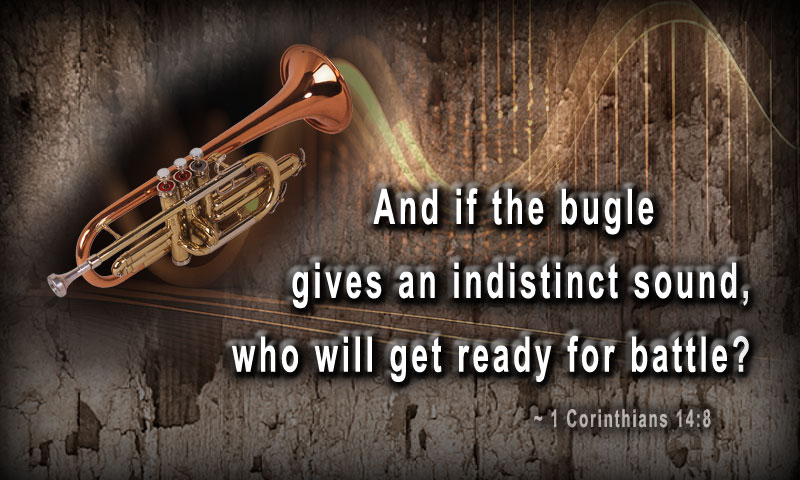
Here, Paul illustrates his previous point about the uselessness of even the true gift apart from translation for the church to understand. If even inanimate musical instruments are expected to make sensible sounds, how much more should human speech make sense, especially when it deals with the things of God? 1 Corinthians 14:23
Paul simply points up the obvious: the purpose of every language is to communicate, not to impress, and certainly not to confuse, as the Corinthians had been doing with their counterfeits. That was clearly the point in the first instance of tongues when each heard the apostles speak in his own language (Acts 2:6, 1 Corinthians 14:8). This section makes an undeniable case for the fact that the true gift of tongues was never some unintelligible gibberish, but was human language that was to be translated (1 Corinthians 14:13).
From: ~ MacArthur Bible Commentary
Paul makes it clear that tongues, apart from utterances that are interpreted, are of no value to the church. For that matter, they bring no personal blessing to the speaker himself unless he understands what is being said (1Corinthians 14:14-15). Those who say that Christians should practice this gift in private ignore what Paul says here. In the first place, how can we edify the church if we use our spiritual gifts in private and not to serve others? And, second, if we do not understand what is being said, how can we profit from it ourselves? It is possible for the flesh and the devil to imitate spiritual gifts and lead a believer into a religion of shallow emotionalism instead of one of solid understanding and faith. This is not to deny the place of sincere emotions in the Christian life, for the fruits of the Spirit certainly involve the emotions (Galatians 5:22-23); these emotions, however, must be instructed by the mind and controlled by the will, or they will be destructive. From: Wiersbe’s Expository Outlines
Why go to church? God’s people assemble for one purpose to worship God. They worship him by their praying and singing, teaching and preaching. And worship should result in glory to God, blessing for God’s people, and fear and conviction for sinners. But for these things to happen, Jesus Christ must be lord of our lives and we must yield to the Holy Spirit. If we come to church to display our spirituality, well, we’ll not only miss the blessing ourselves, but also cause others to miss the blessing, you see, we come to honor Him. A key word in this chapter is edification, which means building up. A worship service should lift up the Lord and build up the saints, not puff up the participants.
Overview: 1 Corinthians – Click Here
The Truth About Tongues, Part 2
Views: 12