
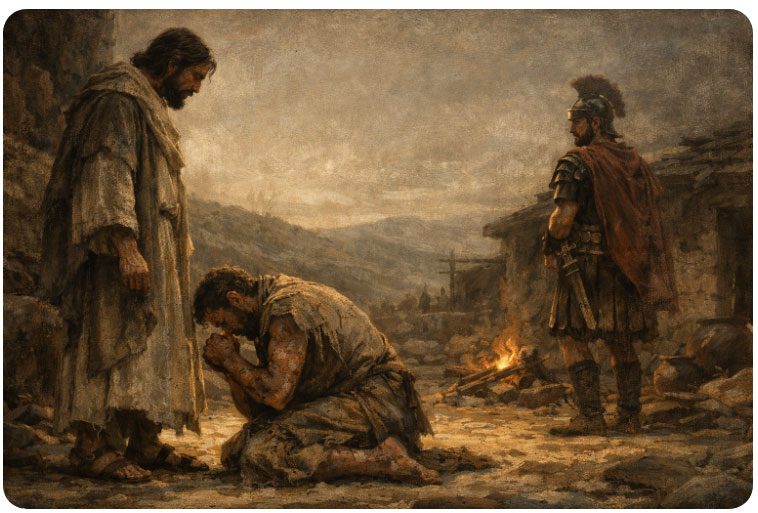
The Difference Between Following Jesus and Trusting Him
Matthew 8 opens with a crowd still following Jesus after the Sermon on the Mount. They have heard His words. Now the question is whether they will trust His authority enough to submit to it. What follows exposes the difference between admiration and faith.
A leper approaches Jesus and falls before Him saying, “Lord, if thou wilt, thou canst make me clean” ~Matthew 8:2. This man does not question Jesus’ power. He submits to Jesus’ will. He knows Christ owes him nothing. His confidence is not in a formula or a demand but in who Jesus is. Jesus answers plainly, “I will; be thou clean” ~Matthew 8:3. The cleansing comes from Christ’s will, not the man’s effort. Yet Jesus immediately commands obedience, “Go thy way, shew thyself to the priest, and offer the gift that Moses commanded” ~Matthew 8:4. Grace does not cancel obedience. Cleansing produces submission, not independence.
Next comes a centurion, a man with rank and authority. He does not ask Jesus to come. He does not rely on proximity or ritual. He says, “Speak the word only, and my servant shall be healed” ~Matthew 8:8. He understands authority because he lives under it. Jesus marvels and says, “I have not found so great faith, no, not in Israel” ~Matthew 8:10. Then comes a warning aimed at the religiously secure: “The children of the kingdom shall be cast out into outer darkness: there shall be weeping and gnashing of teeth” ~Matthew 8:12. Heritage, familiarity, and religious position do not guarantee entrance. Faith that submits to Christ’s authority does.
Jesus then enters Peter’s house and heals his wife’s mother. There is no recorded request. There is no speech of faith. Jesus touches her, “and the fever left her” ~Matthew 8:15. The result is immediate. “She arose, and ministered unto them.” When Christ restores, the response is service. Healing that ends with self does not match the pattern shown.
That evening, many possessed and sick are brought to Him. Jesus does not select a few or test their worthiness. He casts out the spirits “with his word, and healed all that were sick” ~Matthew 8:16. Matthew tells us why. “Himself took our infirmities, and bare our sicknesses” ~Matthew 8:17. The authority of Jesus is not partial. It is complete. He bears what we cannot remove ourselves.
This passage presses one issue again and again. Do you come to Jesus submitted to His will, trusting His authority, and obeying His word. Or do you follow closely, assume safety, and rely on position, familiarity, or association.
The leper bowed. The centurion trusted the word. The healed woman served. The crowd received mercy because Christ bore their burden. But Jesus also warned that some who assumed they belonged would be cast out.
Matthew 8 does not comfort false assurance. It confronts it. The question left standing is simple and unavoidable. Are you resting in who you think you are, or are you submitted to who Jesus is.
Genesis 23:1-24:51
Matthew 8:1-17
Psalm 9:13-20
Proverbs 3:1-6
Read Today’s Scripture – Click Here
Click on the Play Button below to Listen to Today’s Scripture

Psalms 9:15
The nations have sunk in the pit that they made; in the net that they hid, their own foot has been caught. The LORD has made himself known; he has executed judgment; the wicked are snared in the work of their own hands. The wicked shall return to Sheol, all the nations that forget God. For the needy shall not always be forgotten, and the hope of the poor shall not perish forever. Arise, O LORD! Let not man prevail; let the nations be judged before you! Put them in fear, O LORD! Let the nations know that they are but men! ~ Psalms 9:15-20
New Testament: Matthew 8:1-17
Summary:
Jesus Cleanses a Leper
The Faith of a Centurion
Jesus Heals Many
Overview: Matthew 1-13 – Click Here

Views: 13
